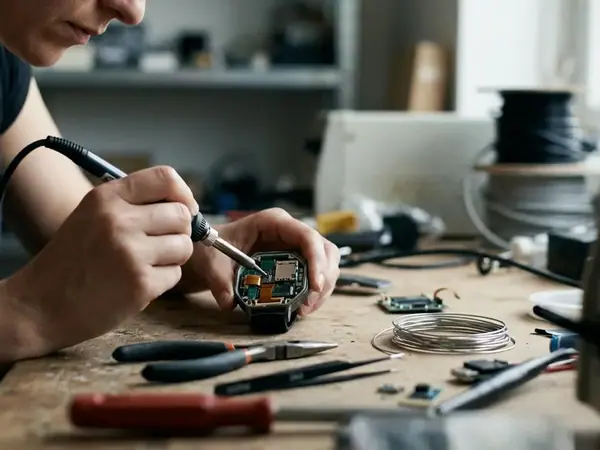
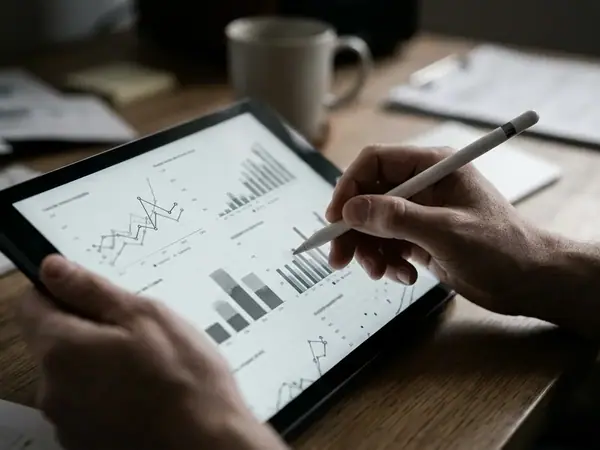
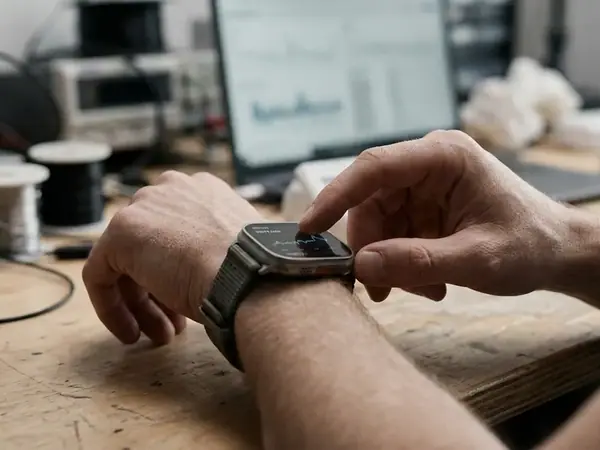
Treat a wearable tech stack like instrumentation, not like a shopping cart. The question is not which smartwatch has the longest feature list. The sharper question is whether one wrist device can produce decision-grade signals across sleep, training load, and metabolic response without flattening the signals that matter.
A practical three-device stack separates duties: overnight recovery tracking, workout-specific cardiovascular capture, and metabolic trend monitoring. That sounds less elegant than one watch doing everything. In practice, it produces cleaner choices.
Why the All-in-One Wearable is a Data Trap
The trap starts with convenience
The all-in-one smartwatch asks for a strange bargain: wear one device everywhere, then trust it to interpret every physiological state from a noisy patch of skin at the wrist. That is convenient. It is also a poor starting point for serious lifelogging.
Useful self-tracking begins with a decision. Should tomorrow’s training be hard or easy? Did the late meal disturb sleep? Is a new breakfast producing a delayed glucose rise? A single dashboard can make those questions look tidy, but tidy is not the same as useful.
Main Point: A modular stack beats brand loyalty when each sensor has one clear job and one metric that changes behavior.
Intentional friction helps. Wetting chest-strap electrodes before a hard interval session, logging meal timing within 10-20 minutes of eating, or placing a ring on a charger after sleep forces a small pause. That pause marks the signal as deliberate. It also separates routine background noise from high-value telemetry.
Baseline before tinkering
Most useful lifelogging review cycles need somewhere around 14-28 consecutive days to reveal baseline patterns. After that, 7-10 day intervention windows can test sleep timing, meal changes, or training blocks without turning the whole project into noise.
This is where a tool such as Saga, a lifelogging application, becomes more useful than another glossy device screen. The stack should preserve context: what was worn, when it was worn, what changed, and what the user was trying to learn.
The Physics of Compromise in Smartwatches
The wrist is a noisy measurement site
The wrist is easy to wear and hard to measure. Tendons move under the strap. Cold skin changes optical readings. Grip-heavy exercise shifts the watch. Even a snug fit can slip during kettlebell work, rowing, rough-road cycling, or cold-weather running below roughly 5-10 degrees Celsius.
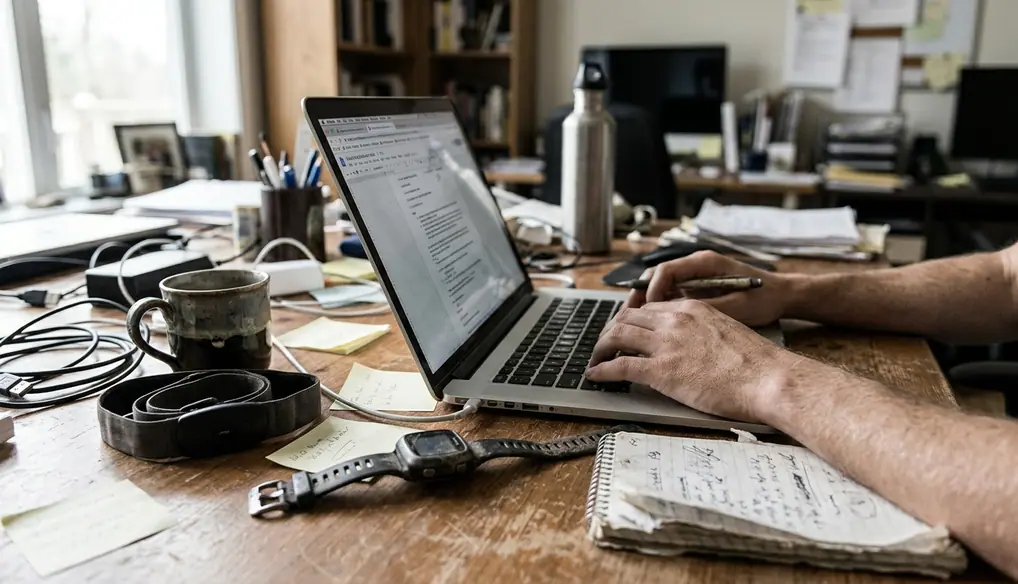
A wrist-only setup can look accurate during steady indoor cycling yet miss short heart-rate spikes during hill sprints, grip-heavy strength sets, or cold outdoor runs. The failure is not moral. It is mechanical.
Wrist optical heart-rate sensors commonly sample in the tens of hertz during active tracking. Chest-worn electrical sensors used for training can operate at much higher signal fidelity during sessions. That difference matters when the question is not average effort, but how quickly the heart rises, recovers, and rises again.
Algorithms smooth the interesting bits
General-purpose algorithms are built for broad usability. They remove jagged edges, suppress artifacts, and present the user with something readable. For many people, that is a good trade.
For deep lifelogging, smoothing can erase the signal. Consumer sleep algorithms often report tidy stage blocks in 5-30 minute chunks, while the underlying night contains brief arousals, position changes, and pulse spikes that may last under 2 minutes. Those small events may explain why a person wakes up rested on one morning and dull on another.
The same issue appears in heart-rate tracking. A plateau may mean steady effort. It may also mean the device lost the plot and filled the gap with a plausible line.
Defining Your Core Telemetry
Start with tomorrow morning
Before buying another device, ask what decision the stack should support tomorrow morning.
If the answer is training intensity, the hierarchy starts with recovery and cardiovascular load. If the answer is food timing, it starts with meal timestamps and glucose trend windows. If the answer is sleep consistency, it starts with sleep midpoint, wake count, resting heart rate, and the direction of HRV rather than a grand sleep score.
- Pick one primary decision. Training, sleep timing, meal response, or stress regulation.
- Name the lead signal. HRV direction, interval recovery, sleep midpoint, or glucose trend.
- Choose the form factor around the signal. Do not make the signal adapt to the gadget.
- Review inside a fixed window. A recovery-led morning check can stay inside 5-8 minutes.
Match the body signal to the sensor
Rings tend to be comfortable for overnight recovery tracking because they stay out of the way and can support multi-night wear. Chest straps make more sense for cardiovascular load during 20-120 minute training sessions, especially when interval heart-rate recovery over 60-180 seconds matters. Metabolic setups need meal timestamps paired with glucose trend windows of 2-4 hours after eating; a quick post-meal glance can miss delayed responses.
Context changes the hierarchy. A shift worker may rank sleep timing and light exposure above training load, while an endurance athlete may accept more device friction to preserve second-level cardiovascular data. The stack is not a personality quiz. It is a measurement plan.
Balancing High-Fidelity Sensors and Battery Life
Signal density spends energy
Battery life is the price of signal density. Every LED pulse, radio sync, processor wake-up, vibration, and display interaction spends energy. Continuous sensing is not magic; it is a series of small withdrawals from a tiny battery.
Low-power rings and bands can often support multi-day overnight tracking. Workout-grade chest straps are better treated as session tools for 30-150 minute blocks. Continuous optical monitoring, frequent Bluetooth syncing, always-on displays, and overnight oxygen tracking can shorten charging intervals from multi-day routines to near-daily routines in heavier use.
Caution: One catch for this build: continuous ECG-style monitoring and high-rate optical capture remain constrained by battery chemistry, skin contact, heat, and user tolerance, so schedule them as targeted sessions rather than permanent background telemetry.
Use a baseline-plus-burst model
The most stable stack uses a low-power baseline monitor for sleep and recovery, then adds high-power sensors only when the signal deserves it. That may mean a ring overnight, a chest strap during hard work, and a glucose sensor scan around meals.
A fixed 20-45 minute top-up during showering, desk work, or pre-bed reading beats waiting for a device to die during the night. The charging ritual becomes part of the protocol, not a rescue operation.
Photoplethysmography is still a serious sensing method, but its limits are placement- and context-sensitive. The nuance is visible in clinical evaluations of photoplethysmography, where sensor behavior depends on conditions that consumer dashboards rarely explain in plain language.
Data Liberation and the API Walled Gardens
Export is ownership
If a device cannot export raw or near-raw records in a usable format, it is better understood as a dashboard rental. The hardware may be beautiful. The subscription may be polished. The telemetry is still trapped.
Useful exports preserve timestamps at least to the minute for sleep and recovery logs, and to the second for workout streams when interval analysis matters. A beautifully designed sleep dashboard becomes weak evidence if export files collapse the night into summary scores and erase awakenings, naps, timezone changes, or sensor-off periods.
Expert Tip: Check the export format before purchase, not after six months of tracking. A CSV file with timestamps is often more valuable than a prettier app screen.
Longitudinal work needs memory
Longitudinal self-experiments need retention windows longer than a single training cycle. The archive should survive 3-12 month reviews without losing historical granularity.
Even open APIs can impose strict rate limits or truncate historical data in ways that disrupt long-term analysis. Store device name, firmware period, sensor placement, timezone, and manual annotations in a local database or open-source aggregator. An unexplained firmware change can look like a physiological change if the archive does not record it.
Older quantified-self writing from Kevin Rexroat, Kitty Ireland, and Thursday Bram often circled the same practical truth: lifelogging becomes more useful when the record is portable enough to question later.
Orchestrating a Multi-Device Routine
Design around failure points
The hard part is not owning three sensors. The hard part is keeping them charged, paired, clean, comfortable, and mentally lightweight.
A sustainable rotation might use a sleep device from 22:00-07:00, a chest strap only during planned workouts, and a metabolic sensor scan or sync during meals and the morning review. That schedule is not glamorous. It is repeatable.
- Pair in the same order: baseline wearable first, workout sensor second, phone or bike computer last.
- Remove stale pairings: clear unused Bluetooth connections every 2-4 weeks.
- Protect the skin: rotate wrist position, loosen straps outside sessions, and clean contact points every 1-3 days.
- Put chargers where the behavior already happens: bathroom shelf, desk tray, bedside table.
Know when friction wins

Sensor fatigue is real. Skin irritation risk rises when the same sensor is worn tightly on the same spot for multiple days. Mental irritation rises when every ordinary meal turns into a logging chore.
The threshold is simple: if an added device does not change a decision, remove it for the next cycle. Keep the baseline. Keep the session tool. Keep the metabolic signal if it changes meal timing or composition. Everything else has to earn its place.
I keep returning to a plain rule: the stack should make one morning choice clearer, not make the user feel more monitored.
The Morning Sync: A Stack in Practice
A quiet protocol
At 06:32, Mara takes off her sleep ring before opening messages. The ring clicks into its charger for a 25-35 minute top-up while the kettle starts. She checks overnight resting heart rate, HRV direction, sleep midpoint, and wake count in less time than it takes the water to boil.
At 06:48, she dampens the chest-strap electrodes at the sink and clips the pod into place. The watch is on her wrist, but today it is mostly a display and logger. The strap carries the cardiovascular signal for a 42-minute zone-mixed run.
Coffee, glucose, and the next decision
At 07:41, the apartment smells like coffee. Mara scans or syncs the glucose sensor, marks breakfast time, and does not overreact to a single morning value. The useful curve will unfold over the next 2-4 hours.
The ring is back on her finger before the first meeting. The strap hangs over the towel rail, rinsed and drying. On the counter, next to the mug, three small devices have each done one job without pretending to be the whole story.