Passive vs. Active Lifelogging: Finding the Right Balance
Passive lifelogging sounds almost too clean: carry the phone, wear the band, let the trail assemble itself. No diary guilt. No forgotten entries. No awkward pause at the end of the day trying to remember whether the afternoon was productive or merely busy.
That promise is real, but it is incomplete. A life recorded only by sensors becomes tidy very quickly, and sometimes tidiness is the first sign that the important parts are missing.
The Seductive Promise of Frictionless Tracking
Capture is not the same as interpretation
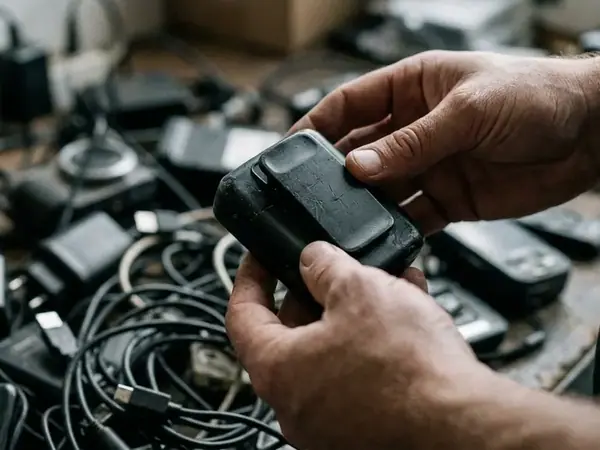
Passive lifelogging is the automated collection of personal behavior and location data through smartphone sensors, wearables, and nearby digital signals. A typical record can include GPS fixes, Wi-Fi proximity, Bluetooth encounters, accelerometer-derived movement, screen unlocks, and wearable motion.
Those fields are useful. They can place a person at home, in transit, at work, at the gym, and back home again. Operationally, passive location systems often build a day-level trail from pings taken every 5 to 15 minutes while moving, with denser bursts during navigation or workouts and sparse updates when the phone sits still.
That is capture. Interpretation is harder.
A single weekday can be reduced to a clean sequence: home from 06:40 to 08:10, commute from 08:10 to 08:55, office from 08:55 to 17:35, gym from 18:05 to 18:50, and home again after 19:15. The record looks complete. It is not. None of those blocks directly says whether the workday felt energizing, humiliating, ordinary, lonely, focused, or strained.
Main Point: Passive lifelogging is strong at capture, especially for narrow questions such as commute duration, sleep regularity, or movement consistency. It is much weaker when the question is meaning, mood, identity, or self-understanding.
That distinction matters for biohacking. If the goal is to audit bedtime consistency, a passive trace may be enough. If the goal is to understand why your energy drops after certain meetings, the sensors need help.
From Steve Mann to the Great Memoto Experiment
The early version was deliberate, not invisible
The history of lifelogging did not begin with sleek phone apps. In 1994, Steve Mann ran a 24-hour live wearable-camera feed, making continuous personal capture visible years before consumer wristbands and clip-on cameras became everyday accessories.
That detail is easy to miss. Mann’s work was not just automation for convenience. It was an intentional, visible experiment in wearable computing. The wearer knew the system, adjusted the system, and carried the social weight of being recorded while recording.
Consumer lifelogging changed the posture. Between 2011 and 2014, early adopters saw wrist-worn activity bands, phone-paired watches, and clip-on automatic cameras arrive in quick succession. Jawbone Up made daily movement feel collectible. Pebble Smartwatch and Sony Smartwatch brought ambient notifications and wrist-based computing into ordinary routines. The interface moved closer to the skin.
Memoto tested the fantasy of automatic memory
The great Memoto experiment at the Quantified Self Europe 2013 conference, often tagged #QSEU13, pushed the premise into a practical test. Five participants were given automatic lifelogging cameras to see whether continuous photography could document daily life with almost no manual input.
The idea had a certain elegance: instead of deciding what mattered, the device would keep sampling. Early clip-on camera workflows commonly used a fixed interval such as one image every 30 seconds. At that cadence, a 12-hour waking day yields something like 1,440 images before deletion, tagging, or review.
That number sounds like abundance until someone has to look through it.
The experiment remains useful because it exposes the bargain at the center of passive capture. You reduce the burden at the moment of recording, but you often move that burden into storage, review, filtering, privacy management, and interpretation.
The Sterile Reality of Purely Passive Data
Colored blocks can hide messy days
A passive system can map recurring coordinates into home, work, transit, errands, and exercise. Apps like Saga are especially good at turning movement into a visible timeline, sometimes rendered as color-coded places or map pixels: blue for home, green for work, another block for transit, another for the gym.
That display can be satisfying. It can also be sterile.
The same office block cannot distinguish focused work from avoidance, conflict, flow, boredom, or a quiet hour spent recovering from a difficult conversation. A phone may know where you were. It does not know what the place cost you.
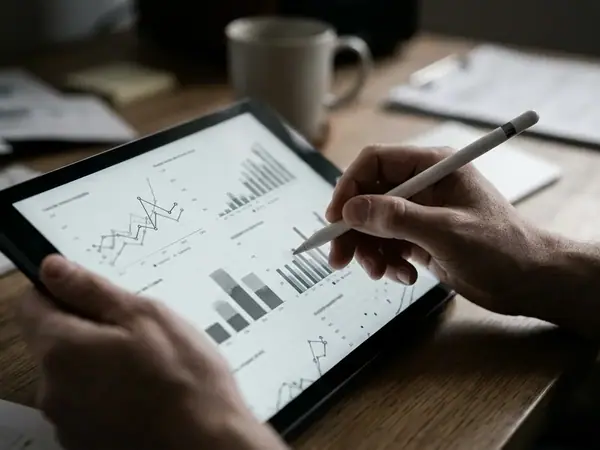
Caution: Personal Big Data becomes tiring when it grows faster than the user’s ability to ask a specific question. More check-ins do not automatically create better experiments.
The privacy problem is social, not only technical
There is also a boundary issue that technical dashboards tend to understate. A 30-second automatic photo cadence produces roughly 2,880 images over a full 24-hour period, including bystanders, private interiors, screens, documents, and children unless the wearer intervenes.
The privacy problem is not only storage security. It is social consent. People near the wearer may be recorded during ordinary public or semi-public moments without receiving a practical chance to opt out.
Location data has its own review burden. If a phone records location every 5 minutes, 30 days produces around 8,640 location rows. That volume is large enough to create fatigue, but still too thin to explain motivation. The file says a person went to work, stopped for groceries, and stayed home in the evening. It does not say whether that routine was stable, numbing, protective, or imposed.
This is where passive logging starts to resemble a polished index without the book.
The Case for Active, Qualitative Lifelogging
The missing column is subjective state
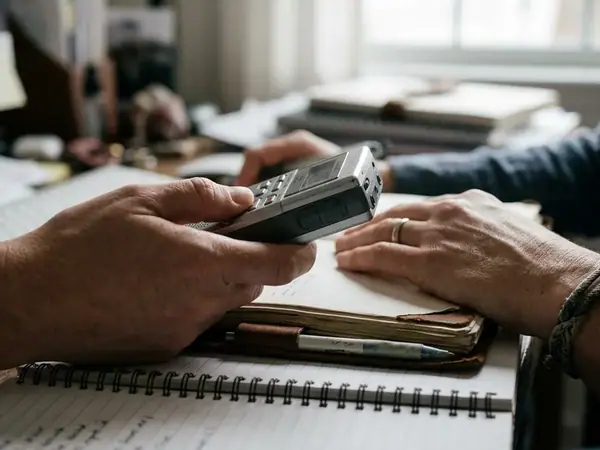
Qualitative lifelogging means deliberately tracking subjective experiences: emotions, energy, attention, perceived stress, social context, and the short explanation that turns an event into a memory. It is not necessarily long-form journaling. A useful entry can be small.
Timestamp
Current activity
Energy level on a short labeled scale
One sentence explaining what is happening
The friction is the point. A 20-to-60-second self-report interrupts autopilot long enough to name the state, which passive tracking deliberately avoids.
Dana Greenfield’s quantified-self presentation on tracking grief after her mother’s death is a good example because the important variable was not motion or place. It was the texture of experience over time. She used active tools such as web forms and a note-taking app to record what sensors could not reasonably infer.
Sampling can beat constant recording
Buster Benson’s Reporter app sits in the same family of thinking. Rather than trying to capture everything continuously, a random-prompt workflow asks for short reports several times per day inside a waking window. A pattern might be 3 to 6 prompts between 09:00 and 21:30, so entries are sampled rather than saved only during dramatic moments.
That distinction matters in real life. People tend to write when something is wrong, unusually good, or socially shareable. Random prompts catch the middle: the low-grade tension, the ordinary satisfaction, the distracted hour, the surprisingly restorative walk.
Expert Tip: Keep the active prompt narrow. If the form takes more than a minute, it starts competing with the life it is supposed to document.
A hospital nurse may log somewhere around 14,000 to 18,000 steps during a shift, but the step total alone cannot show whether the day felt competent, chaotic, morally distressing, or socially supported. That is not a flaw in the step counter. It is a mismatch between the tool and the question.
Finding the Balance: A Hybrid Tracking Strategy
Use passive data as the scaffold
The best practical strategy is not to reject passive logging. It is to give it a narrower job.
Use passive tools to build the timeline: Saga for automated location check-ins, a movement tracker such as Jawbone Up for activity patterns, and phone-based signals for the broad rhythm of the day. Let those systems handle the where and when. They are good at that.
Then layer active tools on top. Evernote can hold longer reflections. Foursquare-style intentional check-ins can mark places that matter because you chose to name them. A short form can capture energy, mood, and the one-sentence context that prevents the timeline from becoming a sterile map.
A weekly setup that does not become a second job
A workable week can stay simple:
Run passive location and movement capture throughout the day.
Add 2 to 4 intentional annotations: one midmorning, one late afternoon, one evening reflection, and one optional entry after an unusual event.
Review the combined record for 30 to 45 minutes every 7 days.
Look for one pattern worth testing, not every possible pattern.
An intentional note changes the meaning of a passive block. Instead of only “office, 13:10 to 16:40,” the combined log can read: “deep work blocked by back-to-back calls; energy dropped after lunch; skipped walk because deadline moved.” That is a different kind of record. It gives the future self something to work with.
A.J. Jacobs’ 12-week lifelogging experiment is useful here as a boundary case. The pile of data became meaningful only when it was reviewed, interpreted, and used to change behavior rather than merely accumulated.
In our group, the most useful logs have usually been the ones that treated sensors as witnesses, not authors. That phrasing may sound small, but it changes the design of the whole system.
Conclusion: You Are More Than Your Metadata
The record needs three layers
Metadata is an index, not the book. It can timestamp the skeleton of a life, but it cannot supply the full account on its own.
A durable lifelog entry needs at least three layers: objective trace, subjective state, and later interpretation. Passive systems usually supply only the first layer and sometimes part of the activity label. Active logging supplies the missing narrative material. Review turns both into a decision.
That final step is where biohacking earns the name. The value appears when a person converts records into a testable change: shifting bedtime by 30 minutes for 10 weekdays, reducing late meetings for 2 workweeks, or adding a walk after lunch on 3 specified days.
Pick up the pen
A useful review cadence can be monthly rather than constant. Export or scan the prior 28 to 31 days, identify 2 or 3 recurring patterns, and choose one behavior experiment for the next month. That is enough pressure to learn without turning the self into a surveillance project.
Passive logging is more informative for repetitive routines such as commuting and sleep timing. Qualitative prompts matter more during grief, burnout, job change, caregiving, and creative work, where the same location can hold completely different meanings from one day to the next.
The Quantified Self movement is at its best when measurement serves awareness. Saga and similar tools can preserve the outline of a day, but the outline is not the autobiography. A true digital autobiography requires the author to actually pick up the pen, not just let the sensors do all the talking.