Why Local Networks Beat GPS for Contextual Awareness
Treat a focus mode as a request for context. The useful question centers on whether the phone has joined the office network, connected to the car, or touched the desk tag. Relying on satellite coordinates for indoor focus modes represents an outdated approach to personal automation.
A geofence commonly spans tens or hundreds of metres. An NFC interaction requires bringing the phone within a few centimetres of the tag. Validate a proposed proxy over 3 to 5 real arrivals before allowing it to silence notifications automatically. Reading authors like Kevin Rexroat reveals a growing shift toward these proximity proxies to establish location without broadcasting coordinates.
The Hidden Costs of Traditional Geofencing
The cost assessment starts by separating operating-system geofencing from aggressive coordinate polling. Modern phones monitor regions efficiently. An app with persistent location permission drains battery life and generates unnecessary data trails.
Review the location-permission panel for apps granted background access, then inspect the operating system's recent-access indicator over a day or three. Indoor coordinate acquisition involves satellite, cellular, nearby-network, and motion data. A Wi-Fi automation reacts to the single event generated when association with a saved network completes.
GPS remains appropriate for turn-by-turn navigation, route recording, outdoor safety features, and automations that must distinguish places sharing no local infrastructure; it is excessive for a binary state such as home versus work. Granting continuous location permissions to productivity apps expands your attack surface and compromises lifelogging privacy in applications like Saga.
Using Wi-Fi SSIDs as Your Primary Location Proxy
Choose the office SSID because connection requires successful cryptographic association. A renamed hotspot can imitate the network name. Sensitive automations must rely on successful connection to a saved network to prevent spoofing.
In the phone's automation app, create a personal routine and select the event for joining the specific network. Test the routine by leaving Wi-Fi range for a few minutes. Return with the phone locked and check whether Work Focus appears within roughly 5 to 30 seconds of reconnection.
Startup Association Behavior: Run at least 3 arrival tests and 2 departure tests. Include one test after restarting the phone because saved-network association behaves differently during startup — practitioner accounts of Thursday Bram indicate as much.
Using Bluetooth for Micro-Location Triggers
Use Bluetooth when an accessory represents the activity more accurately than the building does. A connection to the car stereo serves as a strong Driving Focus signal. Connection to one designated noise-canceling headset triggers Deep Work Mode.
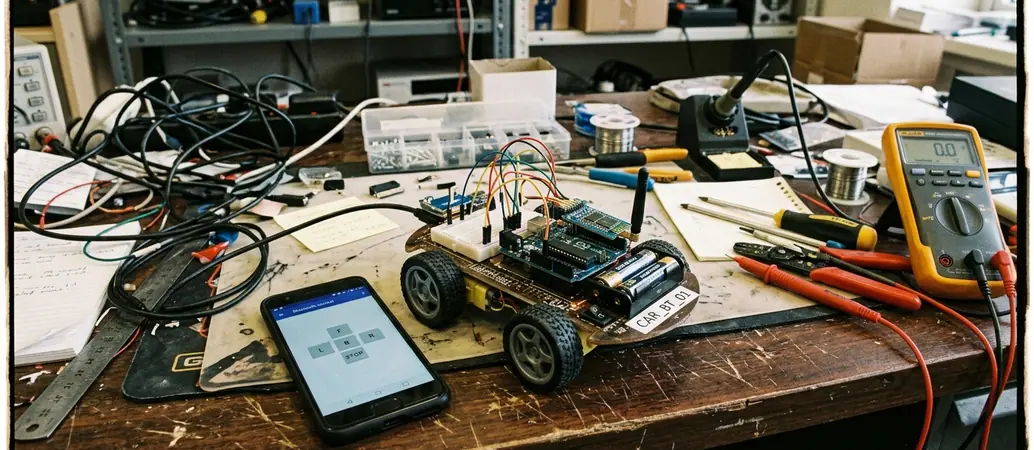
Match a saved device identity or hardware address. Two headsets can share the same factory-default name. Test automatic reconnection from a cold start over about five ignition cycles. Consumer car systems take something like 5 to 45 seconds to become available after the vehicle powers on.
Bluetooth accessories connect according to power state and pairing priority, independent of distance. Headphones left powered on in an adjacent room can activate Deep Work without the wearer being at the desk. Configure these triggers natively in iOS Shortcuts or Android Tasker without requiring third-party location-harvesting plugins. Review the official documentation on personal automation triggers to map out available hardware hooks.
Deploying NFC Tags for Intentional Context Switching
Select NFC when deliberate switching is preferable to invisible inference. Program one sticker beside the desk to enable Deep Work and another near the exit to disable it. The tag holds a small identifier.
Common NFC stickers operate at 13.56 MHz, contain no battery, and are normally read with the phone held within roughly 1 to 4 centimetres. Place the tag away from exposed metal or use an on-metal tag. Test 5 taps with the screen locked and 5 with it unlocked before mounting it permanently.
Writers like Kitty Ireland have documented how this physical action appeals to intentional tech usage, contrasting with passive background scanning.
Your Next Step: Audit and Replace One GPS Trigger Today
Open the native automation app and inspect routines that use arrival, departure, map radius, or background location. Pick one whose real requirement is access to a known network or accessory.
- Identify one automation containing an arrival, departure, radius, or map condition.
- Define the actual state needed: building, room-scale activity, accessory use, or deliberate mode change.
- Use Wi-Fi for a known building, Bluetooth for an accessory-linked activity, and NFC for a deliberate mode change.
Run the old and replacement routines in parallel for a few days, but allow only one of them to change the focus state. Log the other trigger's timestamps for comparison. After 3 successful entries and 3 successful exits, delete the geographic trigger. Change the app's location permission from background access to the least-privileged setting that preserves its remaining features.